Posts By :

thinkdm2

Architecture in 2017: Sophisticated Services in a Complex Environment

Architecture in 2017: Sophisticated Services in a Complex Environment 960 540 DMR Architects

By Lloyd A. Rosenberg, AIA

Architecture is a continually stimulating profession, especially for the firm’s owner who addresses complexities in various industries in delivering the service. Most people correctly associate architecture with creativity, as design is at the core of our profession, but the business of architecture incorporates numerous skills and processes beyond aesthetics. No where is this more true than DMR, which is larger and more diverse than most architectural firms, and integrates engineering, planning, environmental, bidding, construction supervision, legal and more into our service mix.

But it does always come back to design, because that is our deliverable. A subject of much discussion in every project, the challenges of design begin not with a blank canvas but with a set of constraints: space limitations, functionality, budgets and available materials are just four of the variables that are addressed by the architect. The real estate business positions the architect as the natural pivot point between the property owner and the contractor, so not only are we engaged for design, the architect is largely focused on managing the business issues of real estate development.

The architect’s role in development has never been greater than in the current environment, where regulatory standards have grown in complexity. For example, in New Jersey, various government agencies responding to Superstorm Sandy have adopted regulations on flood plains that can undermine the viability of projects already on the drawing board. And among other issues we have encountered this year, the unexpected presence of migratory birds prevented us from removing trees, postponing construction. Unknowns adds risk to development, and one of an architect¹s functions is to foresee potential issues and plan around them, eliminating the risk, but it is not always possible.

And finally, there is the variable represented by the market itself. Construction materials and labor costs can change after the planning for a project, but before it is commenced. The architect must monitor these issues so that there are no negative surprises after construction begins. And projects that seemed to be in demand when planned might not find a robust market when completed. All of these issues and many more must be factored not only into our service to our clients, but in the management of our architectural practice.

After 25 years in business, over which time DMR has become the 4th largest architectural firm in New Jersey, we’ve seen multiple cycles in the real estate industry. No economy is like any other, making it impossible to predict the length or impact of an expansion or a contraction. The correct management policy is to be ready to respond to changes in either direction always looking for the best position for future growth. Even when the business climate is in a downturn, there is a right way to contract that allows architects to take advantage of the inevitable opportunities to grow.

At DMR the main principle of stability is depth and diversity. We have structured the firm to weather downs and maximize ups by being able to shift into various practice areas depending on the demand cycle. In expansions, office and residential work is plentiful. In contractions, education and healthcare work may not be as plentiful but technology advancements often lead to redevelopment. By maintaining a staff that has expertise in a broad array of practice areas, we not only protect the stability of our own firm, we provide our clients with a depth of institutional knowledge that can only be developed through taking good ideas from one area and applying them to another.

A complicated business? Yes. But a rewarding one, especially when the day comes that a project is complete and we see it not only for its excellent design, but for all the elements that we blended into accomplishing its development.
Timing and Process Is Key in Development Projects

Timing and Process Is Key in Development Projects 960 540 DMR Architects

By Lloyd A. Rosenberg, AIA

Delays in construction projects can be costly—but perhaps the most expensive delays are the ones that occur before construction even begins. Materials and labor costs continue to rise in the economic expansion, and the cost of projects can increase from 10-20% from the time they are approved to the time construction begins.

The political environment can be very cumbersome, and months or even years can pass between the time a project is originally conceived and budgeted until it actually breaks ground. We’ve worked with some townships on building plans as recently as two years ago that are now not in the budget anymore because they waited.

As we are currently working on more than 12 municipal building projects across New Jersey, we recommend that municipalities calendar a re-budgeting process every three months so that delays can be priced into the final budget; and that bidding for jobs take place as soon as possible after approval. Typically a consultant has been retained to assist in the bidding for the project during its design phase who can be tasked with regular estimate updates. All the costs associated with the project need to be affirmed at regular intervals if there are hang-ups in getting started.

Another important discipline is foresight into what happens with the project in the next generation. For example, if the municipality needs to house 50 office employees now, what happens if the number is 70 in 10 years? Or 30? With growth in government balanced by automation of some functions, requirements of today surely will evolve with time, and a conscious approach to how property assets can be repurposed will save challenges for the next generation.

And finally, the project managers on the municipal side need to be satisfied that they understand all the elements of the project and their ramifications before it commences and specifically articulate all of their expectations. Too often, both sides take it for granted that everything is understood by a review of the drawings. But the business issues are much deeper than the plans, and without a detailed examination of the architect’s buildings plans against the client’s plan for the building, disaster can strike in the form of surprises when the building is complete and it’s too late for alterations.

Challenge your architect to explain how the plans relate to regulatory and other requirements conditions, which will help reveal potential complications in timing, and budget impacts.

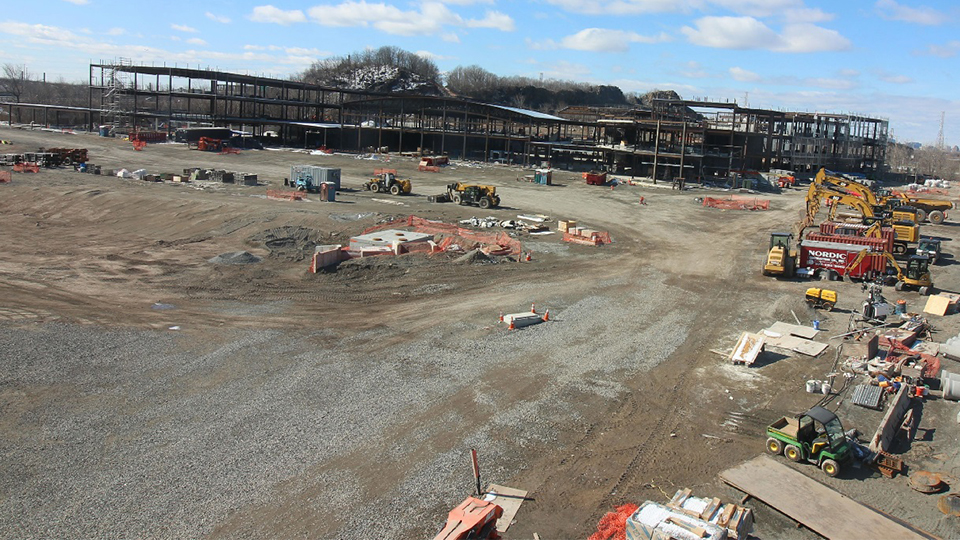
With so many elements going into the making of a new building, recognizing that there will be surprises during the construction phase that even your architect or contractor didn’t imagine, and accounting for that ahead of time can save municipalities both time and money. DMR, acting as the project manager for projects including the currently-in-construction Frank J. Gargiulo Campus in Secaucus, is using technologies that allow all contractors on the project to talk daily in real time about potential issues and practical solutions, keeping them on a tight budget and aggressive timeline.

There are risk-management processes that can deliver highly predictable and desirable project outcomes, but often timeframes and budget issues push even the most disciplined professionals off best practices. At every turn, people need to remind themselves to measure twice and cut once. Mistakes mean doing things over, and that is far more expensive than doing them right the first time.

This article also appeared on New Jersey Association of Counties Newsletter.

Making Partner

Making Partner

Making Partner 960 540 DMR Architects

By Lloyd A. Rosenberg, AIA

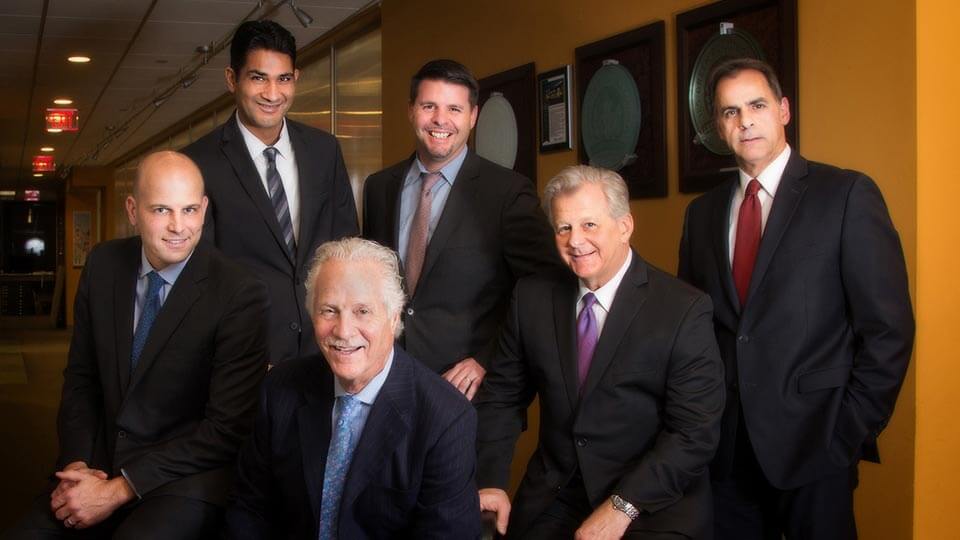
The firm I founded in 1991, DMR Architects, belongs to six of us a result of naming the first of what I expect will be many partners.

The profession of architecture has spawned many compensation structures and equity arrangements, but it is probably fair to say that if a firm is going to invite partnership, it does so sooner than 25 years. So why now?

DMR generously rewards innovation and productivity and as a result we enjoy strong employee retention and company morale. Our wonderful company culture is always evolving and at this point in our history needed an aura of leadership that is prospectively eternal and needed to expand beyond one person. And then, after going through the process of contemplating where to begin sharing the firm, I realized that “making partner” is not just a recognition by the firm of the team member attaining an elevated value as a result of their contributions. Making partner happens because the firm itself creates an environment that encourages personal growth for its employees and has committed to a system of promotion that goes all the way to the top. Under that criteria, when I considered whom to name a partner, I realized I could make a case for almost everyone at the firm. And thereby began a difficult process of identifying a first set of partners who could act as mentors for other team members, resulting in the first five “making partner” and providing a path for the rest.

The new partners have committed to incorporating into our value system a process of continuing to make new partners, which will take on a life of its own. As a profession, architecture evades a simple metric for who drives the success of the firm. For example, while law firms are collaborative places, their nature is quite different from an architectural firm, where contributions to the end product come from a diverse set of professionals inside of and outside of the firm; and the regulatory and professional controls are applied in a variety of environments. Our billing routines are also unique to our profession. Like law firms, we like rainmakers and we like workhorses, but we don’t limit the measure of the team member’s value to those criteria. For example, we recognize that the contributions made by our in-house legal, finance, new business development and marketing people are invaluable to the operation of the firm.

So what “makes” a partner? At DMR, the common thread is that they treated the firm like owners before they owned it, but the other aspects vary a surprising amount. In varying proportions our new partners are old-hands, younger-hands, extroverts, introverts, scholars, warriors, romantics and empire-builders in varying proportions, among many other attributes.

If it is puzzling why it would take me 25 years to make partners and now I have made five partners and am looking forward to considering more, it’s because the process of inviting our first set of shareholders has been an epiphany to me of what makes DMR work: which is that many of our people feel like they own the place and are willing to do what it takes to help us advance as a firm.

Bergen architectural firm seizes big opportunities, thrives on a challenge

Bergen architectural firm seizes big opportunities, thrives on a challenge 960 540 DMR Architects

by Linda Moss

Architect Lloyd Rosenberg was undaunted when plans for a nearly $1 billion commercial development in Ridgefield Park had to be dramatically reconfigured to accommodate Al and Alice, a pair of bald eagles.

“We had to redesign the whole project,” said Rosenberg, president and chief executive officer of DMR Architects in Hasbrouck Heights. “It’s just part of what we have to do … It’s not unusual.”

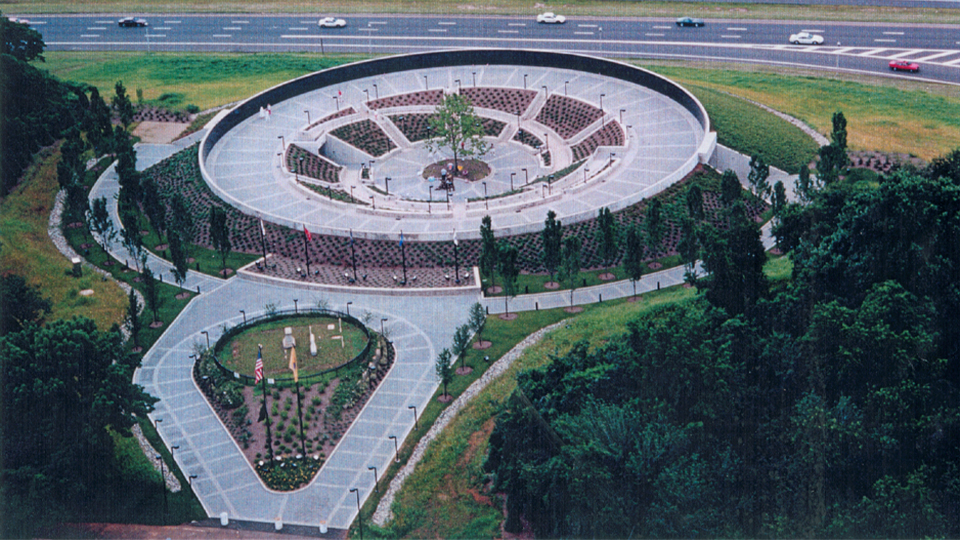
DMR has done extensive work in North Jersey, where the only land left to develop often poses environmental or wildlife-conservation challenges, be it protecting eagles or bog turtles, according to Rosenberg. If you live in the region, odds are pretty good that you’ve set eyes on at least one place or project DMR has worked on, be it a hospital like Holy Name Medical Center in Teaneck, the Meadowlands rail station, downtown Hackensack’s redevelopment or the New Jersey Vietnam Veterans’ Memorial in Holmdel.

This year, booming DMR, the fourth-largest architectural firm in the state in terms of staff size, is busy with two big projects. It is architect and planner for SkyMark, a Ridgefield Park development — in the works for two decades — that will include about 1,500 residential units, 350,000 square feet of retail space and a 300-room hotel when its final phase is complete. Construction on the project, dubbed “Eagle’s Nest” by some, is finally expected to begin this spring. And work is continuing on Hudson County’s new $144 million High Tech High School in Secaucus, designed by DMR. The final steel beam was installed last week at the site, 22 acres adjacent to Laurel Hill County Park. The 350,000-square-foot facility is slated to open in September next year.

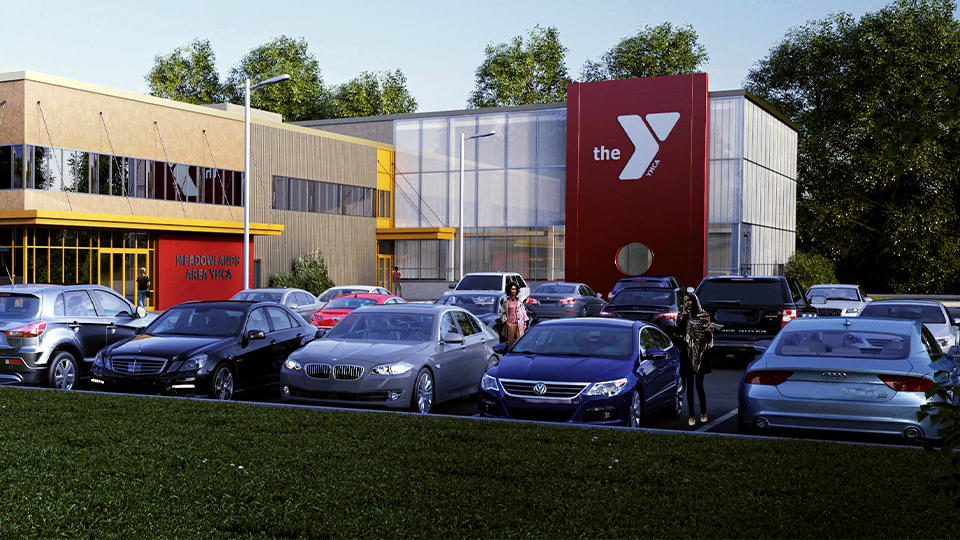
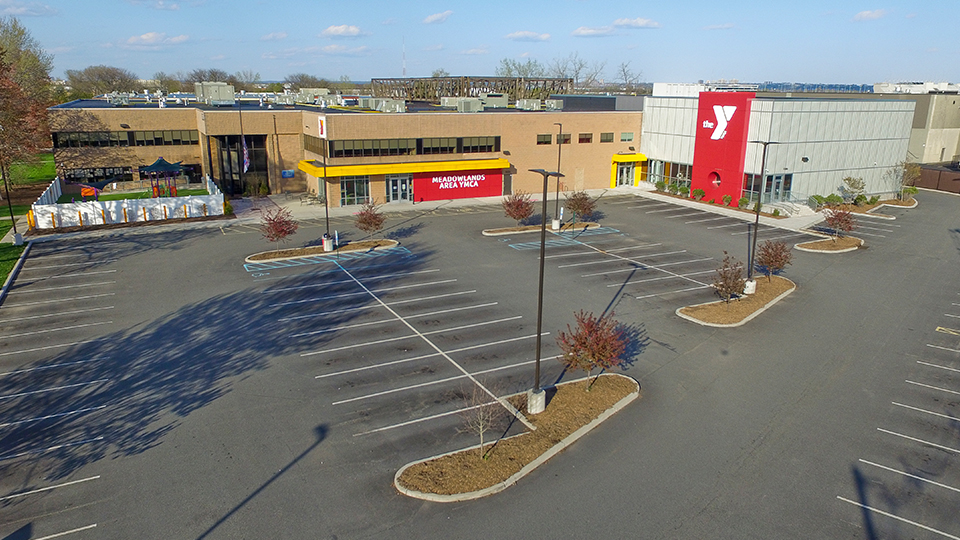
A third DMR project, the $10 million transformation of the former Nets basketball team’s training center in East Rutherford to the home of the Meadowlands Area YMCA, opens in April.

Buoyed by such undertakings, and the economy’s recovery, DMR enjoyed a banner year in 2016, when it celebrated its 25th anniversary. The firm, which has about 100 projects in various stages, saw its projected revenue last year climb about 84 percent to $9.8 million from $5.3 million in 2015. So it could accommodate its increased workload, last year DMR added nine employees, bringing its staff roster to 39. And last week, for the first time, DMR named five partners, Rosenberg said, to spread management duties and to lay a foundation for his succession.

New high school was a boon

DMR founder Rosenberg, who turned 74 last week, said the firm got a big boost last year because work on the regional high school in Hudson County got off the ground, a project being bankrolled by the county and the state. He acknowledged that DMR suffered some bad years, most notably during the Great Recession, and cited the cyclical nature of his business in explaining why 2016 was stellar.

“The real estate market was strong in New Jersey,” Rosenberg said. “The municipalities we work with felt confident to go out and have their facilities improved. The private developers – low-interest rate, greater demand, increased values – they became strong. The reason we’re so successful is we have a very diverse practice. So we do private work. We do schools and colleges. We do public facilities, police stations and municipal buildings. We do office buildings. We do healthcare … We have a diverse practice, and all of the sectors in the market sort of increased volume.”

That’s the strategy behind having a full-service architectural practice, according to Rosenberg.

“We anticipate at times one sector is going to go down, and one sector is going to go up,” he said. “This particular year [2016] everybody went up.

Consequently, we did better and we hired more people.”

DMR’s recent growth appears to have been outpacing its peers. The American Institute of Architects tracks billings nationally and regionally through its Architecture Billings Index, or ABI , said Ben Lee, the new president of the group’s New Jersey chapter and chief financial officer for NK Architects in Morristown. In November, the index was 50.6 nationally and 50.8 for the Northeast, according to Lee. Anything above 50 represents an increase in billings. Referring to the Northeast’s performance, he said, “It’s good, but it’s not moving a full digit.”

Eagle issue resolved at SkyMark

The SkyMark center rivals American Dream Meadowlands, the massive retail-entertainment complex being built in the East Rutherford Meadowlands, in terms of its delays.

“We’ve owned this property since 1999,” said Tony Noce, development manager for Paramus-based SkyMark Development Co. “It was originally going to be developed as office but now it’s mixed use and it’s just a complex project … We’ve done all the environmental remediation. There was an eagle’s nest. We had to get major infrastructure improvements approved with the N.J. DOT [Department of Transportation] and the Turnpike Authority to provide access to the site. All these things take a lot of time to get.”

As the architect and planner, Rosenberg said DMR had the task of reworking SkyMark’s plans to create a five-acre buffer to protect the two eagles and their nest.

Ultimately, the plan approved by federal officials will carve out an 11-acre eagle preserve on the southern end of the SkyMark property, taking up about 20 percent of the 55-acre site, Noce said. SkyMark will be built at the crossroads of the New Jersey Turnpike and routes 46 and 80.

Noce said he and developer Ralph Ianuzzi Jr. are in the final stages of putting together SkyMark’s financing. They are slated to meet with the Ridgefield Park village board of commissioners this week to update them on the project, according to Mayor George Fosdick. Noce said he expects construction to start in late spring.

Police headquarters projects 

This year construction on another one of DMR’s projects, a $7 million Garfield police station, is also slated to begin. The current headquarters on Midland Avenue, constructed in 1960,  is “woefully undersized” for the 66-member police force and “was built for another era,” City Manager Thomas Duch said. Local police headquarters have become another DMR area of expertise, according to Rosenberg.

Originally, plans were for another architecture firm to design the new Garfield police headquarters. However, city officials gave DMR the job after they were “impressed” by a presentation by Rosenberg, as well as by his design work at the Bergen County Public Safety Operations Center in Mahwah, according to Duch.

“Many of these police stations now are outdated,” Rosenberg said. “They don’t have the current technology. Their facilities are not safe. They’re not habitable.”

Rosenberg said it’s hard to make forecasts for this year, but that he thinks President Trump will be effective helping the business community and stimulating the economy, especially in the tri-state region.

“I hope that he does the things that he said he’s going to do with infrastructure and public work and hospitals and schools,” Rosenberg said. “We do live in his geographic area.”

This article originally appeared on NorthJersey.com.

How architects can take advantage of economic cycles, even the downturns

How architects can take advantage of economic cycles, even the downturns 960 540 DMR Architects

Lloyd Rosenberg, AIA, president and CEO of Hasbrouck Heights-based DMR Architects has been through several economic cycles, including three recessions, since he started his company in 1991.

Fueled by the recent strength of the construction industry, DMR is celebrating its 25th anniversary with its largest headcount and is recording its highest revenue.

While not immune to economic cycles, the firm has used downturns as strategic thresholds in which it increases market share and adapt to new trends, often diversifying into new practice areas and adding key talent in recessions.

According to Mr. Rosenberg, the firm comes by its counter-intuitive growth strategy as a natural consequence of its beginnings: “In 1991, we only had three people, we couldn’t get any smaller so there was no place to go but up.”

Here are some thoughts on how he’s been able to grow his business through three recessions:

Using a Core Competency to Build a Diversified Practice – and Brand:

DMR’s diversification has many benefits and is the work of an intended strategy that had its roots in a single practice area. Working on various project categories with a wide variety of industries not only insulates the firm against cycles, it also keeps the staff interested and challenged, cross-pollinating the firm. But getting there is another matter — diversified professional practices are grown one piece at a time, and creating adjoining and complementary services, while an intended strategy, is more art than science.

Shortly after Rosenberg founded DMR, it earned the reputation as an esteemed school architect, ultimately serving more than 75 school systems throughout New Jersey. While working with schools, he developed relationships with municipal leaders and recognized there was a need for updated municipal buildings and, in some cases, urban planning, inspiring him to create a team that could address these issues as a cohesive unit.

“New Jersey’s multi-family needs have changed over the past decade, necessitating municipalities to collaborate with architecture firms that can not only create a vision plan for them, but also work them through zoning and other practical issues so that they can become a more sustainable community,” said Francis Reiner, PP, LLA, Senior Urban Designer, who joined DMR in 2008.

DMR’s diversification built on its initial strengths in school, articulating out to areas where it could apply its expertise profitably to new client categories.

For example, its assignment for the new 82,000 square foot Meadowlands YMCA includes design, permitting, planning and engineering roles — which are vertical and horizontal integrations of its legacy strength in school projects. Simultaneously, it is the architect for the new High Tech High School, which will be the most advanced high school project in the country.

Keeping Clients Happy/Relationship Building:

According to Rosenberg, “You’ve got to listen to what people are saying and convey that you sincerely care about what they need and about helping to find it.”

In South Toms River, DMR helped administrators see that they could get the municipal building that suited their needs for several generations by repurposing a daycare center. It has also recently worked with Hunterdon Medical to convert an office building into a 55,000 square foot satellite medical office, providing more convenient services to its patients in a warm and inviting atmosphere.

Keeping Staff Happy:

One of the great things about the culture at DMR is that with so many types of projects, there are constant opportunities for staff to collaborate and learn from each other. It makes each project seem fresh to the staff involved and results in more creative ideas for DMR’s clients.

Rosenberg also strives to create an atmosphere that is more like a peppy family than an office, most recently celebrating its 25th Anniversary year by providing staff with 25 daily surprises including a hot breakfast party, in-house massages and several 3 p.m. sweets breaks. Birthdays are a big to-do throughout the year, and they also celebrate the Winter Holidays yearly with an ugly sweater contest.

His employees appreciates his efforts to create opportunities for professional growth and personal comfort; the staff section of the company web site boasts that more than 13 of the staff have been with Rosenberg for more than 10 years.

“It’s energizing to know that while today, I’m working on the interior redesign of an apartment community, tomorrow, I might be managing the adaptive reuse of an office building into a police station, or assisting a local Community College create a space to accommodate for an entirely new administrative process” said Kurt Vierheilig, AIA, LEED AP, Senior Designer and Project Manager.

The staff’s tenure and experience also support the continuity of service in segments whose robustness occurs in different parts of the economic cycle. In turn, DMR always has the personnel base capable of shifting focus as the client base evolves.

This article originally appeared in Real Estate Weekly.

DMR Architects CEO sees opportunity to grow his firm in China

DMR Architects CEO sees opportunity to grow his firm in China 960 540 DMR Architects

by Joshua Burd

In mid-November, Lloyd Rosenberg was a long way from his home state of New Jersey.

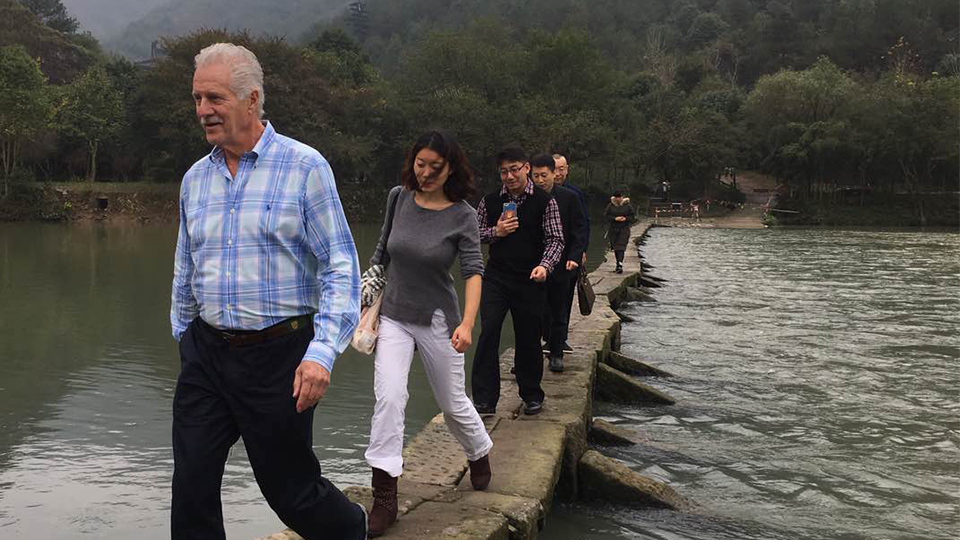
But perhaps it takes that kind of journey to see what he saw during his 10-day trip in China, one that included tours of several breathtaking, historic villages in the southwestern region of the country.

“They were absolutely magnificent,” said Rosenberg, CEO and president of DMR Architects, in Hasbrouck Heights. “They were built on hillsides, built on rivers—it was spectacular.”

For Rosenberg, they are among the lasting images from a trip that could help grow his firm’s presence in China. DMR has since partnered with a Beijing-based architecture firm, Long On Group, in submitting designs for a rail-served 24-acre site in Lishui City that the local government hopes to redevelop.

The proposals, which are due this week, aim to transform the area around a high-speed railway station into a tourism destination that will include hotels, retail, restaurants, entertainment and public ground transportation.

“They’re very aggressive in planning, very aggressive in development, very aggressive in entertainment,” he said. “I would say the biggest thing I saw was the amount of tourism that they’re promoting—internal to China—people in China traveling around to see other parts of their country and be tourists.

“It’s not dissimilar to us.”

But as Rosenberg’s firm gets involved in redevelopment overseas, his trip also allowed him to weigh in on how to preserve China’s history.

This involvement stems largely from Rosenberg’s longtime friendship with James Jao, a fellow architect who once practiced in New York City before moving to Beijing more than 25 years ago. DMR has done consulting work for Jao’s firm, Long On Group, prompting Rosenberg and his staff to visit China several times in recent years.

His most recent visit took place in November, when he was invited to speak at the Qindongnan Conference on Preserving the Traditional Chinese Village. Appearing before some 500 senior government and planning officials, Rosenberg said one of his main objectives was to explain the process of preserving historic buildings and sites in the U.S., with the idea China could adopt such an approach for its own small villages that are exponentially older than anything in his home country.

“We have a method in place that exists that seems to work,” said Rosenberg, who was “honored to be able to speak as a representative of the architectural community” in the U.S. “And if they want to model something, it’s a model that could be replicated.”

He noted that the U.S. approach is often tied to tourism and entertainment, which presents one avenue for preserving China’s older villages as residents leave to pursue education and jobs in more urban areas.

For Rosenberg, the trip was bookended by private tours of villages in southwestern China, including Guiyang, Kaili City, Qiandongnan and Lishui, he said. The journey offered him a different perspective from his previous visits, which were tied to DMR’s master planning work for a 420-acre community in Shanghai’s Xin Jiang Wan township.

That plan included residential housing for 16,000 residents, a pedestrian retail strip, community and recreational facility, school building and office park, Rosenberg said. The project features include streams, rivers, lakes and landscape that connects one back to nature, which he said is at the heart of the Chinese culture.

It’s an example of the importance of towing the line between redevelopment and preservation in China, a dynamic that DMR Architects now has in mind as it seeks to do work in Lishui City and elsewhere.

“The Chinese people have a history that they’re proud of and they want to maintain that,” Rosenberg said. “They’re very proud of their history, they’re proud of their nationality and their culture and they want to visit the new and the old in China, so they want to visit new places that are being developed and they want to visit the old places that go back to their ancestors.”

This article originally appeared on NJBiz.